You know the nearer your destination the more you're slip slidin' away. ~ Paul Simon
What could be better? Schools are
out for summer, the debt ceiling circus has departed until New Years Day 2025,
roughly 3 weeks before the newly-elected president takes his/her oath of office,
and the summer solstice will soon shine longest for all us North Hemispherians on
June 21st when it will be directly overhead at the Tropic of Cancer.
Unfortunately, not everything is
hunky dory. There are several remaining issues. First, the Federal Reserve Bank’s
target interest rate; next, the proposed, fundamentally-different rises
in California electricity rates; and lastly, the impending submission of an
official report on reparations by the California Reparations Task Force.
Interesting. From center field of the macroeconomics policy
ballpark, I hope the Federal Reserve will increase its inflation target rate
from 2% to 3% at its September 20 meetings. Through thick and thin, the Fed’s 2%
target rate has been in effect for the last 11 years. Despite the Fed’s solipsistic
concerns about its credibility, the target rate should be modified soon. It’s
both overdue and utterly independent from how the markets and certainly the public
view its credibility.
On the contrary, I believe its
credibility will be strengthened when it raises the target to a more realistic
3%. Even at 3%, the Fed still has its anti-inflationary work cut out for itself.
The current core PCE Price Index that the Fed uses to measure inflation is 4.7%,
which thankfully has been declining, but is still elevated.
In the roster of international
central banks, the Fed was an inflation target dawdler. The Central Bank of New
Zealand pioneered its 2% inflation target in 1989. By 2012, when the Fed finally
adopted a 2% target rate, 27 other national central banks had already set inflation
targets, usually 2%.
Come on Fed Board members, get
with inflation’s new milieu. It’s no longer 2012, the economy has changed a lot;
2% is no longer a solution. Rolling back inflation down to 2% isn’t going to
happen without markedly increasing unemployment, which is always a bad
call, especially during presidential campaign season. Imagine what the media
will do for the Fed’s credibility as unemployment keeps rising, and the dozen
or so presidential wannabes screech about the impending recession. Times
change, so should the Fed and its rate. Raise the target rate to 3% at your Autumnal
equinox meetings and call it a macroeconomic victory.
Zapping electricity rates. The State of California and the California
Public Utilities Commission (CPUC) apparently were not completely satisfied after
the CPUC issued its anti-solar Dec. 2022 rate decision in the name of equity
that crushed incentives for Californians who were planning to conserve
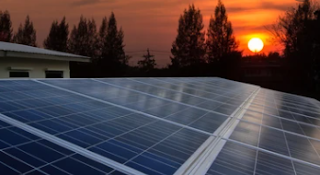
electricity by installing very green rooftop solar panels. The CPUC solar decision
adopted the interests of California’s investor-owned utilities that see solar
as a threat. The new solar rate schedule, implemented on Apr 15th, will reduce solar-generated
payments to new customers by up to 80%. I previously blogged about this fraught
decision here.
The CPUC is now considering
linking a customer’s income level with their electric bills to promote more
equitable rates. This linkage between electric rates and income was authorized by
California’s 2022 Legislature which passed an energy bill stating in part that electric
rates need to be related to customer income levels. This rate-income linkage
never has been considered previously, certainly not for equity reasons. California
once again may be on the bleeding edge of over-innovative potential equity enhancement.
The legislative and now CPUC
equityists believe electric and gas bills are one means of correcting systemic
inequity. It is a narrowly shared belief that’s already created a fair amount
of blowback beyond the sizeable additional multi-million dollar expenses that
will be required to track electric customers’ income over time and be integrated
into the utilities’ billing systems. The utilities and CPUC are aware of these
sizeable additional expenses, and have suggested kicking this nasty fiscal can
onto a separate road. They want the added mega-dollars to be paid by California’s
taxpayers, not electricity ratepayers. That’s faulty but impressive hutzpah.
The CPUC is now considering electric
rates that include an Income-Graduated Fixed Charge (IGFC). How’s that for bureaucratic
clarity. In plainer English, the greater your income, the more you’ll be paying
no matter how much electricity (kWh) you use, because your income has been “graduated”
into your rates. It’s labeled a fixed charge, because it is not related to how
many kWh a customer has used.
If you’re a PG&E customer in
the highest income bracket (>$100k/yr.) you’ll pay $36.69/mo., 13% more than
the middle-incomers. The lowest bracket (<$50k/yr.) customers would probably
pay no fixed charge, only a “volumetric charge,” meaning their bill would just be
based on how many kWh they have consumed. Other utility IGFC rates would assess
fixed fees as high as $128/mo.
This new rate policy is likely to
work against the goals of needed additional energy efficiency because IGFC
rates may increase the bills for lower-usage, non-low income customers. For
customers like these the IGFC will likely be the largest portion of their
monthly bill; it’s definitely likely for us as veteran solar kWh producers.
Critics of IGFC rates argue that
they will deter progress on energy efficiency and energy conservation efforts. Such
folks include those who have already or are considering installation of solar
or other energy-savings kit. Inappropriately, with these IGFC rates higher-usage
customers will receive relatively more savings. Other critics say using
electric rates to correct inequality will offer, at best, minor benefits and
large costs. Such annual costs include an estimated $2.8M of added “internal
labor costs” by the utilities over the first 4 years, plus the expected
multi-million dollar expenses of contracting with the single Third-Party Entity
(a large, private contractor) to be hired by the CPUC who will be responsible to
conduct the on-going customer income verification process. But, hey it’s true
cobalt blue California where the ever-increasing varieties of inequality that surround
us must be annihilated.
Establishing income-based
electric rates like IGFC is a misdirected, oblique means of resolving inequality
that will include unintended consequences as well as considerable distress by
confused customers, especially when they receive their first notice asking us
to confirm our income level for the CPUC’s mandate with others perhaps to
follow annually.
Paying for bygone sins. The last issue involves reducing inequality using
the deep end of the public fiscal policy pool. I’m referring to California’s
possible attempt to rectify the effects of abhorrent past racial policies by
providing direct reparations payments to those harmed by these policies.
The California Reparations Task
Force will submit its final report to the legislature on July 1st, after
spending 2 years assessing what the state should do about reparations. Because
California entered the nation as a free state in 1850, it never legally
operated under slavery. Thus, reparations to Black Californians may be provided
by the state to atone for the effects of discriminatory public policies that
created “systemic disparities,” rather than recompense for slavery itself. The
task force has focused on policies that have had inequitable effects on wealth,
health, housing and education.

Not to be bested by the state,
and illustrating the nitty-gritty rivalry among the Golden State’s progressive
politicians, San Francisco’s reparations committee suggests paying $5M to each eligible
Black resident in the City. London Breed, the mayor of San Francisco – and the
City’s first mayor of color – has declined so far to endorse her city’s
proposal. Burrowing down into even smaller jurisdictions with shallower funding
pools but outsized aspirations, the Berkeley Unified School District also is
examining how much its Black students should receive as reparations.
The straightforward fact is these
reparation efforts unavoidably include fantastical and unobtainable fiscal payments.
Travelling further down the reparations road will be a perilous passage for
Dems, especially progressive ones. They are headed into a very tight political
and economic corner of their own making. For 3 reasons the Dems should be dissuaded
from backing direct reparation payments.
First, no jurisdiction – be it a school district, city, county or state – has the financial ability to pay what task forces and committees are recommending for direct reparations. There aren’t even any large-enough slush funds available. Such reparation amounts would literally break their budgets. For reparations proponents, fiscal infeasibility is irrelevant; I don't agree. As mentioned below, reparations are well-liked with many Black Americans, but not with Whites. Despite this narrow popularity and an understandable moral foundation, requested reparations will be unfeasible to provide.
Perhaps the task forces and committees
are adopting a first shoot for the stars bargaining strategy. They already know
their requests are way beyond budget realities. The mayor, school board, county
council or governor might first offer a compromise by providing a formal apology to Black constituents
for these indisputably bad policies from the past. Then add a “symbolic payment” over a multi-year period of say one-tenth of
the task force’s implausibly requested reparations amount. Will the task force accept such a two-part offer?
As this is happening opponents of any compromise will have a field day publicly
lambasting it, even if privately these opponents don’t disagree with the offer.
Second, direct reparations are unpopular.
Simply put, the majority of Americans do not support reparations payments. Unsurprisingly,
views of reparations vary widely by race and ethnicity. Two-thirds of surveyed
White adults say descendants of slaves should not be given reparations. In
stark contrast, about three-quarters of Black adults assert descendants of
enslaved people should be paid reparations. In California, only 43% of surveyed
adults said they support having the California Reparations Task Force seek
reparations from the state.
Third, pro-reparations Dem politicians
should remember the tale of California Prop 187, the 1994 “Save Our State”
initiative. It’s now hard to believe, but in the dark past Repubs once enjoyed more
power in the state’s political firmament. One of the several reasons they slipped
was Prop 187.
Voters passed Prop 187 that would
have established a state-run screening system to prohibit illegal immigrants – mostly
crossing from Mexico into the state – from using non-emergency health care,
public education, and other services in California. Outraged opponents promptly
filed lawsuits challenging the new law. Four years later, after many anti-187
demonstrations and legal hearings, a Federal Court judged this proposition in to
be unconstitutional. It was never put into action and became one of several
contributing factors that eventually displaced Repubs as a force in California
state politics.
If the California Legislature mistakenly
passes a bill that institutionalizes paying the requested reparations directly to
resident Black ancestors of slaves and Gov. Newsom signs it, they’ll bust the
state’s piggy bank, which is already facing a $32B deficit; oh well, what’s $800B more. In
addition, I bet the Dems’ reparations acceptance will create much political
flack for themselves and perhaps allow the now-immobilized Repubs to “ride to
the rescue” in denouncing this effort, perhaps even returning to some political
power in California this fall. If Dems don’t agree to pay, they’ll confront many
offended Black citizens.
Furthermore, if the legislature
and governor sign-off on paying any amount of cash reparations for qualified
Black Californians, there is no doubt that Hispanic and Indigenous/Native
American Californians will rise to the occasion and demand their own reparations
for systemic disparities they have faced. Currently, Blacks represent 6.4% of Californians;
Hispanics represent 40%; Indigenous people represent 2.1%.
How California’s Dems in the
legislature and governor’s office deal with the Task Force’s final report in 2
weeks will obviously be closely watched near and far. Expect them initially to
say they need more time to study the requests in detail, even though they’ll
know exactly what the task force is proposing.
Perhaps this study break will
allow negotiations with the task force and other prominent members of the state’s
Black community to discuss the worthiness of providing indirect benefits like
reducing educational and/or health expenses rather than the fiscal
impossibility of paying what’s been requested.
The Dems’ ultimate political decisions
will reveal who they believe should be winners and losers in this zero-sum
reparations arena. They would be wise to also remember Tuesday, Nov. 5th in
each of their discussions. These Dem politicians will finally realize it was
relatively facile and inexpensive to support studying reparations. However, on
July 1st the tab will now be owed that everyone may have to pay for in more
than just dollars.